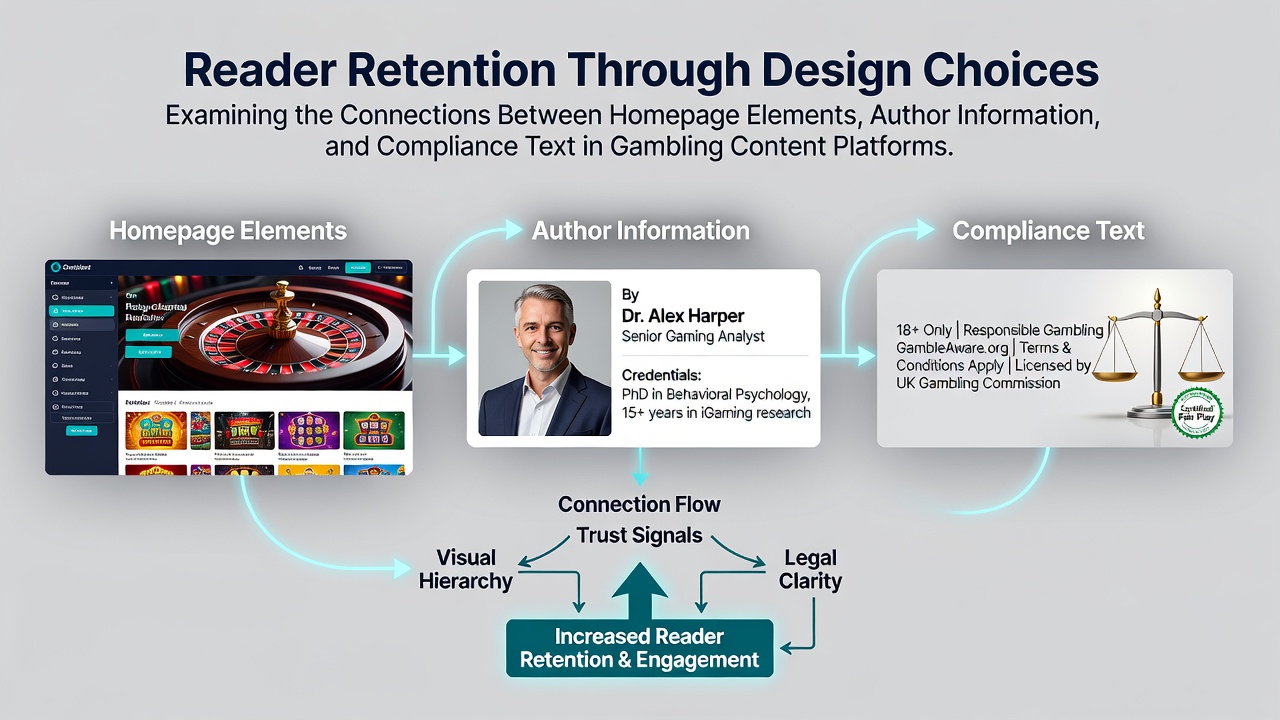
Design Synergies: Homepage Elements, Author Bios, and Compliance Text in Gambling Content Retention
Design choices on gambling content platforms connect homepage elements with author information and compliance text in ways that shape how readers move through sites and decide whether to return, while data from industry reports in early 2026 shows continued growth in user engagement metrics across major markets. Observers note that homepage configurations often include prominent navigation bars, featured review sections, and quick-access links to regulatory resources, yet these components work alongside detailed author profiles that establish credibility through credentials and publication histories.
Homepage Layout Patterns and Initial Reader Pathways
Homepage structures on these platforms typically feature categorized content blocks that guide visitors toward specific topics such as game reviews or regulatory updates, and researchers at academic institutions have documented how clear visual hierarchies reduce bounce rates by directing attention to high-value sections without overwhelming new arrivals. Data indicates that platforms incorporating dynamic elements like rotating banners for recent compliance updates see higher session durations, whereas static designs sometimes lead to quicker exits when users fail to locate relevant author-backed articles within the first few clicks. Those who've studied user behavior across multiple regions report that integration of sidebar widgets with links to author archives creates secondary pathways, allowing readers to explore bios after initial content consumption and thereby extending time on site during peak periods in 2026.
Author Information as a Bridge to Sustained Interest
Author bios placed strategically near article previews or within dedicated profile pages supply context about expertise in areas like game mechanics or legal frameworks, which in turn encourages readers to trust and follow ongoing series from the same contributors. Evidence from platform analytics reveals that sites displaying author photos alongside publication counts and areas of focus experience measurable increases in return visits, particularly when these details appear consistently across homepage carousels and individual post footers. What's interesting is how these profiles often link to compliance-related content authored by the same individuals, creating thematic threads that keep audiences engaged through a sense of continuity rather than isolated articles.
Compliance Text Integration and Its Retention Effects
Compliance notices, disclaimers, and regulatory statements integrated into footers or dedicated homepage modules serve not only legal requirements but also function as trust signals that influence whether visitors proceed deeper into the site. Figures from regulatory bodies in various jurisdictions, including the Nevada Gaming Control Board, demonstrate that transparent disclosure of licensing details and responsible gaming resources correlates with longer average page views when paired with author attributions that reference those same standards. Platforms that embed these texts near author information sections allow readers to cross-reference credentials with legal assurances in a single viewing flow, and this arrangement has been observed to support higher completion rates for multi-page content journeys throughout mid-2026.

Interconnections Across Elements During Mid-2026 Trends
Analyses conducted by research teams in Australia and Canada highlight how homepage elements, author details, and compliance text operate as an interconnected system rather than isolated features, with changes in one area often amplifying effects in others during periods of rising traffic such as June 2026. For instance, when homepage menus direct users to author-curated compliance guides, retention metrics improve because readers encounter consistent messaging about platform standards and writer qualifications in sequence. Industry organizations like the European Gaming and Betting Association have compiled reports showing that sites optimizing these connections through unified design systems achieve better audience persistence compared to those treating each component separately.
Take one case where experts examined multiple gambling review portals and discovered that embedding author contact forms directly adjacent to footer compliance links prompted higher newsletter sign-ups, which themselves function as retention tools by delivering follow-up content over time. This pattern emerges because readers perceive a cohesive environment where design supports both informational access and regulatory transparency without abrupt shifts in tone or layout.
Practical Examples from Platform Operations
Observers have tracked how certain sites refresh homepage hero sections monthly to feature new author contributions on compliance topics, resulting in sustained click-through rates that feed back into profile page visits. Data from these operations shows that when compliance text includes references to specific author-reviewed policies, the overall structure encourages deeper exploration rather than surface-level scanning. Yet variations exist across markets, with North American platforms sometimes prioritizing visual author spotlights while European counterparts emphasize integrated legal modules within navigation flows.
Conclusion
The connections between homepage elements, author information, and compliance text continue to define retention outcomes on gambling content platforms as traffic patterns evolve through 2026, with coordinated design approaches yielding measurable advantages in session length and return frequency according to aggregated industry data. Researchers continue to examine these dynamics across global sites, noting that effective implementations treat the three areas as complementary rather than additive components within broader user experience frameworks.