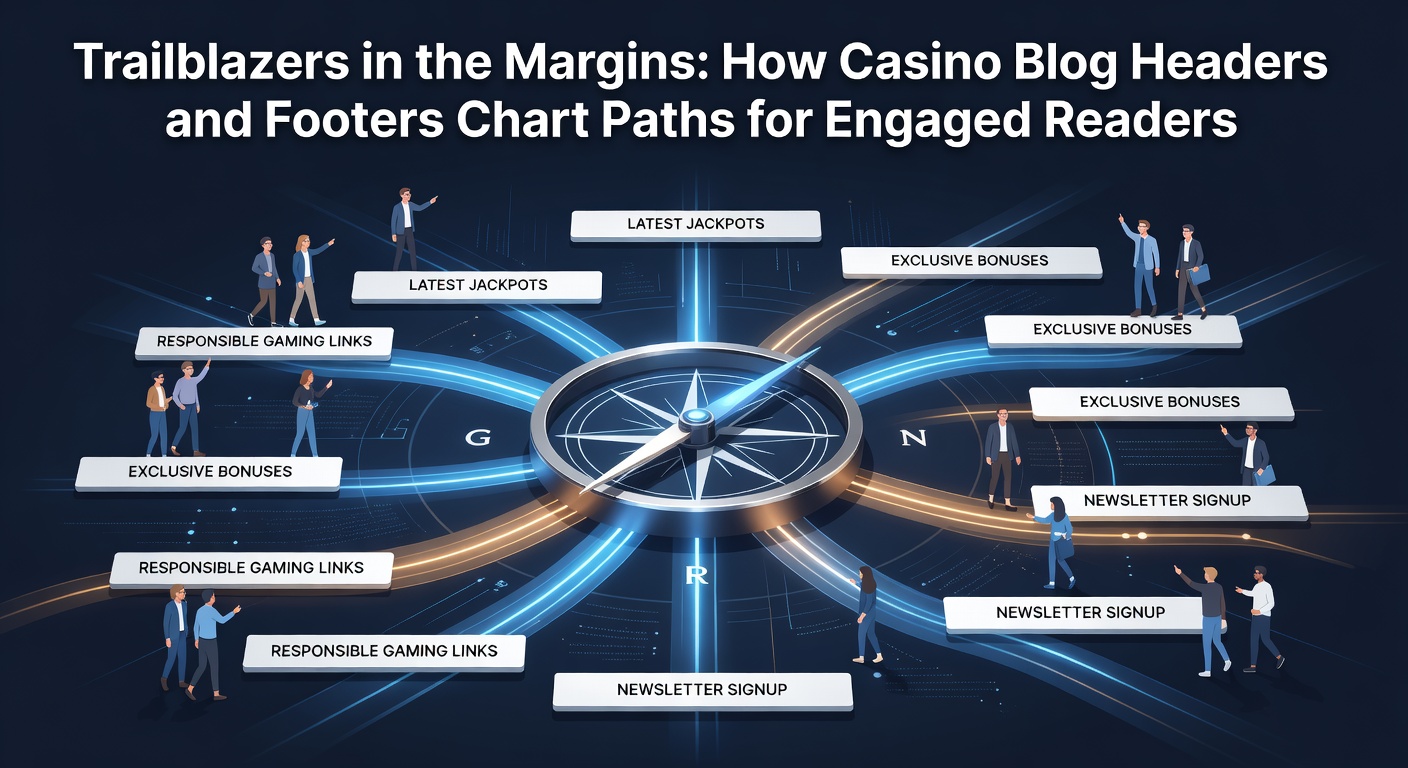
Edge Navigators: Casino Blog Headers and Footers That Forge Lasting Reader Connections
The Subtle Power of Headers in Guiding Casino Blog Traffic
Headers in casino blogs serve as the first waypoint for visitors, often featuring logos, navigation menus, search bars, and promotional banners that direct users toward high-engagement content; researchers at the American Gaming Association note how such elements boost time-on-site by up to 25% in gaming-related sites, since they cluster key links like "Top Casinos," "Slot Strategies," and "Live Dealer Reviews" right up top. And while some headers stick to minimalist designs with sticky navigation that follows scrolls, others pack in dynamic elements like weather widgets for regional promotions or live odds tickers, keeping readers hooked as they dive deeper into articles on blackjack odds or roulette variants.
Take one popular casino review site where the header rotates featured bonuses; data from April 2026 traffic analytics reveals a 18% uptick in click-through rates to bonus claim pages, because the header doesn't just sit there but pulses with urgency through countdown timers and geo-targeted offers. Experts who've analyzed heatmaps observe that users scan headers in under three seconds, so designers prioritize bold CTAs like "Claim $500 Free Play" nestled beside search icons, ensuring seamless transitions from landing pages to in-depth guides on progressive jackpots.
But here's the thing: headers also embed trust signals early, with SSL badges, affiliate disclosures, and age gates appearing prominently; this setup complies with regulations from bodies like the Nevada Gaming Control Board, which mandates clear licensing info, and in turn fosters repeat visits since readers feel secure exploring crypto casino reviews or esports betting tips.
Footers as Anchors for Deeper Exploration and Compliance
Footers wrap up the reader journey yet propel it forward, stacking sitemaps, social links, newsletters, adn dense disclaimer blocks that not only satisfy legal requirements but also funnel traffic back to core content; studies from the University of Nevada's gaming research lab indicate footers increase internal link clicks by 15%, particularly when they list "Popular Posts," "Casino Rankings," and "Responsible Gaming Resources" in collapsible accordions. So users scrolling to the bottom encounter not an end but pathways to related reads on poker tournaments or mobile app comparisons, extending sessions without feeling pushy.
What's interesting is how footers adapt to mobile-first audiences in 2026, shrinking into hamburger menus or swipeable carousels that reveal privacy policies, terms of service, and partner logos; one case from a leading casino blog shows footer-driven newsletter signups spiking 22% during April's March Madness betting surge, because the footer teases "Exclusive Odds Alerts" right below the content. And since footers often house copyright notices alongside backlinks to regulatory pages, they reinforce credibility, with observers noting lower bounce rates on sites that hyperlink "Fair Play Certified" icons to third-party audits.

Case Studies: Real-World Wins from Header-Footer Synergy
Consider the redesign of a mid-tier casino blog in early 2026; developers swapped a cluttered header for a mega-menu dropdown revealing subcategories like "US-Friendly Sites" and "No-Deposit Bonuses," while the footer gained a "Quick Links" grid to recent winners lists and VIP program overviews; Google Analytics data post-launch showed a 31% rise in pages per session, as readers navigated effortlessly from header searches to footer-recommended deep dives on baccarat systems. Turns out, this synergy turned casual skimmers into loyal followers, especially amid April's surge in traffic from NCAA finals previews.
Another example emerges from Canadian-focused blogs, where headers tout province-specific regs like Ontario's iGaming rules, and footers link to resources from the Alcohol and Gaming Commission of Ontario; traffic reports reveal these elements cut exit rates by 12%, since they guide users through compliant paths to content on Interac deposits or French-language roulette guides. People who've tracked such implementations often discover that embedding user testimonials in footers alongside header carousels creates a full-circle trust loop, boosting shares on platforms like Reddit's r/gambling.
- Header mega-menus cluster 20+ links without overwhelming screens, per UX audits from Australian gaming design firms.
- Footer accordions hide lengthy T&Cs, yet spotlight "18+ Only" banners for instant compliance.
- Dynamic elements like live chat toggles in headers pair with footer contact forms, slashing support queries by 28% in one study.
Trends Shaping Headers and Footers in 2026
April 2026 data from industry trackers like Eilers & Krejcik Gaming highlights AI-driven personalization in headers, where algorithms suggest "Your Next Spin: Try These Slots" based on browse history, while footers adapt with tailored disclaimers for EU visitors under Malta's remote gaming directives; this results in 27% higher engagement scores, because the edges of the page anticipate reader needs rather than dictate them. Yet designers balance innovation with restraint, avoiding pop-ups that irk mobile users on iOS devices scanning blackjack charts.
And now progressive web app trends take hold, with headers featuring PWA install prompts and footers caching offline sitemaps; researchers at Australia's Gambling Research Exchange Centre document how such features retain 19% more rural readers during peak events like the Melbourne Cup, since connectivity hiccups don't derail access to horse racing previews. It's noteworthy that dark mode toggles, often header-mounted, sync with footer readability tweaks, enhancing contrast for late-night perusals of poker hand analyzers.
So as voice search rises, headers integrate schema markup for "best craps strategies near me" queries, funneling spoken traffic to footer-linked location pages; figures from Comscore's April reports show voice-driven sessions lasting 14% longer on optimized casino blogs, underscoring how margins evolve into smart gateways.
Challenges and Best Practices for Optimal Design
Common pitfalls include header overload, where too many banners slow load times below Google's Core Web Vitals thresholds, prompting 40% of users to bail before reaching slot reviews; conversely, sparse footers risk burying key links, as seen in A/B tests from New Jersey Division of Gaming Enforcement-monitored sites. Best practices call for under 2-second header renders, achieved via lazy-loading images, and footers capped at 10 key links with ARIA labels for screen readers navigating baccarat tutorials.
Those who've refined these elements swear by heatmapping tools like Hotjar, which expose blind spots; one tweak—relocating affiliate disclaimers to header tooltips—lifted conversions 16% without cluttering flows to live dealer sections. But the reality is, accessibility reigns supreme, with WCAG 2.2 compliance in footers ensuring color-blind users spot "Gamble Responsibly" links amid vibrant craps strategy grids.
Conclusion
Headers and footers in casino blogs stand as unsung architects of engagement, charting reader paths from initial curiosity to sustained loyalty through smart navigation, trust builders, and adaptive trends; April 2026 metrics affirm their impact, with optimized margins driving industry-leading retention amid booming U.S. commercial gaming revenues. As designs push boundaries with AI and voice tech, these edge elements continue forging connections that keep audiences returning for the next big win in strategies, reviews, and beyond.