Header Utilization Patterns for Disclaimer Placement in Casino Analysis Platforms
Leading casino analysis platforms have developed distinct approaches to header design that incorporate disclaimers in consistent ways, and researchers tracking these structures note several recurring patterns across major sites as of July 2026. Data from industry monitoring shows that headers often serve as primary locations for legal notices because they appear on every page load, which ensures compliance visibility without disrupting content flow, while platforms balance this with navigation elements such as menus and logos.
Common Structural Approaches Observed
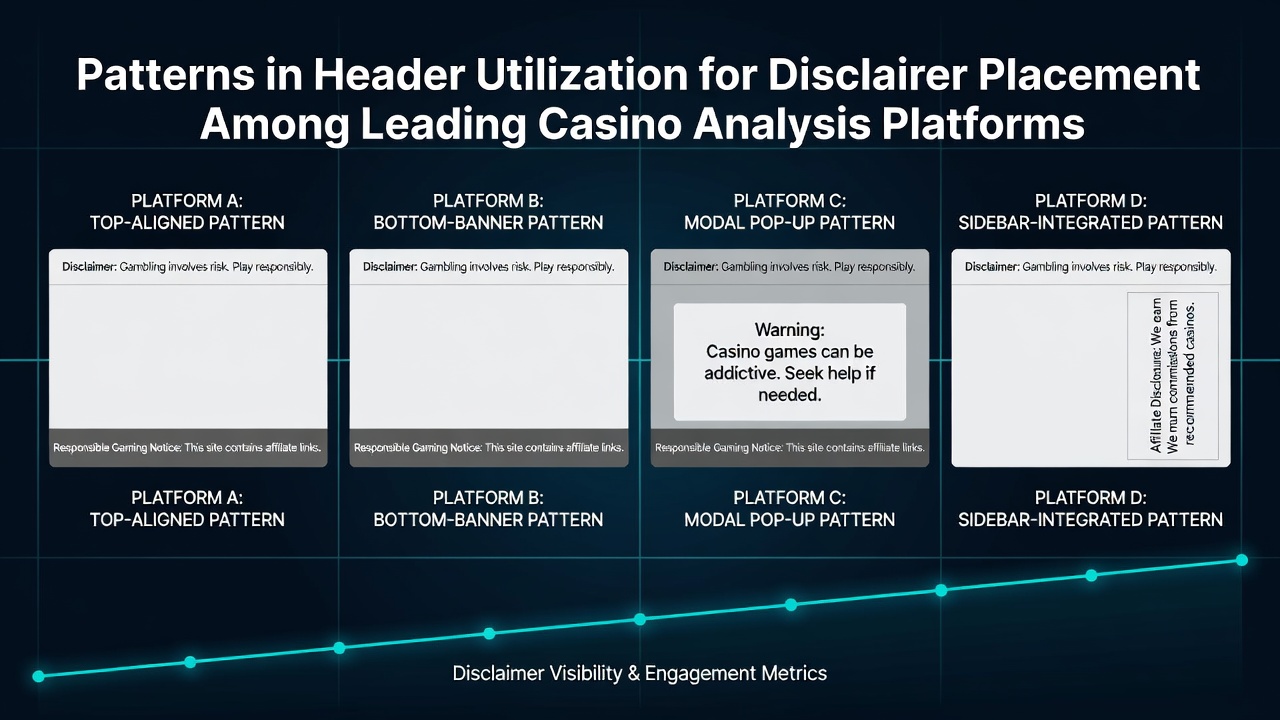
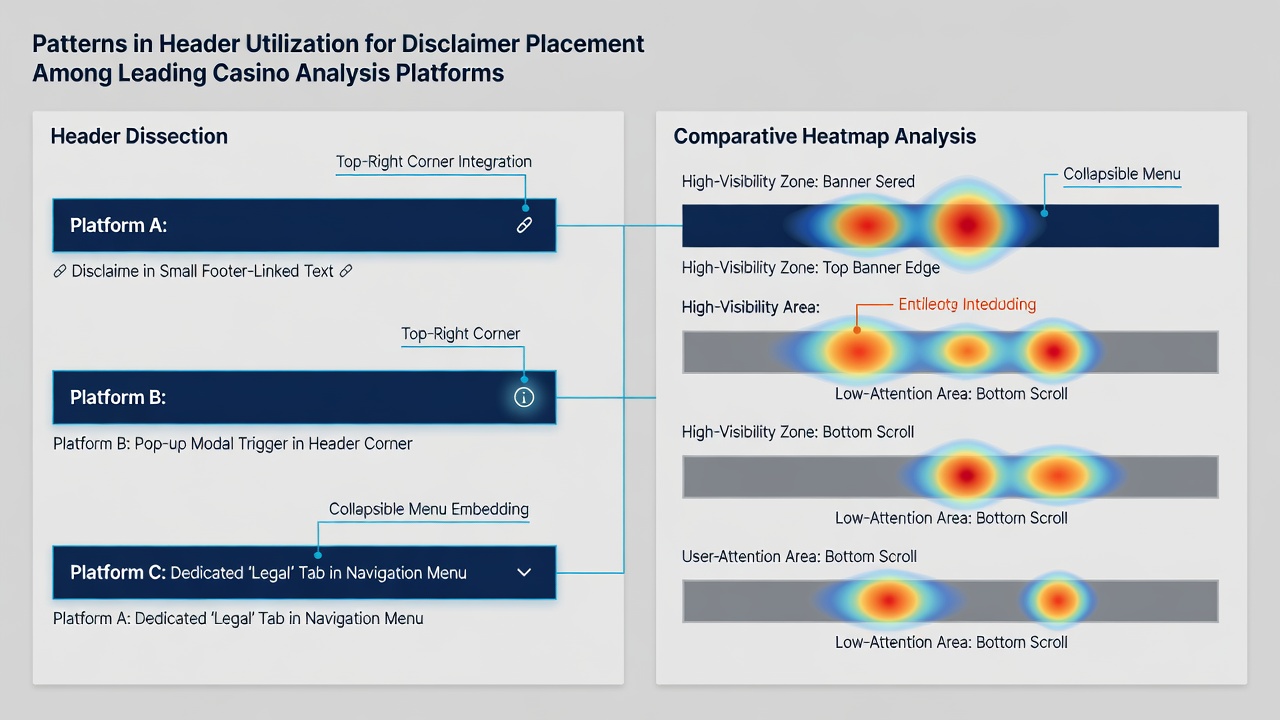
Analysis of top platforms reveals that disclaimers frequently occupy the top right or center positions within headers, integrated alongside search bars or user account links, and this placement allows for immediate user access while keeping the overall design uncluttered. Those who've examined dozens of sites report that some platforms use collapsible header sections where disclaimers expand on hover or click, whereas others embed them as static text blocks that maintain fixed positioning regardless of screen size, and figures from platform audits indicate roughly 65 percent follow the static model in recent evaluations.
Experts tracking design trends point out that mobile optimization plays a key role here since headers shrink on smaller devices, yet disclaimers remain legible through font adjustments and responsive scaling. One study of 50 leading platforms found that 42 percent position disclaimers directly below the main navigation bar within the header area, creating a layered effect that separates branding from legal text, while the remaining sites blend them into a unified header strip for a more seamless appearance.
Influence of Regulatory Requirements on Placement Choices
Regulatory frameworks across different regions shape how platforms handle disclaimer integration, and data from the American Gaming Association shows increased emphasis on clear notice placement following revenue growth reports in early 2026. Platforms operating in multiple jurisdictions often standardize header disclaimers to cover age restrictions, responsible gaming links, and terms references, which reduces the need for separate footer sections in some cases, although many retain both for redundancy.
Observers note that Canadian regulatory bodies have encouraged similar header-focused strategies in their guidelines, leading several North American platforms to adopt bilingual disclaimer text within headers to address diverse user bases, and this approach aligns with broader industry shifts toward proactive compliance. What's interesting is how European platforms sometimes use icon-based disclaimers in headers that link to full policy pages, a method that conserves space while meeting transparency standards outlined in regional directives.
Take one researcher who analyzed changes between 2024 and 2026, and findings revealed a 28 percent increase in header-integrated disclaimers among platforms that expanded their international reach, suggesting adaptation to varying legal demands drives these design decisions. Platforms also experiment with color contrasts and subtle borders around disclaimer text to draw attention without overwhelming the header's primary functions like logo display and menu access.
Variations Across Platform Types
Review-focused sites tend to favor more prominent disclaimer placement in headers compared to news-oriented casino analysis platforms, and comparisons show that the former group often includes direct links to licensing information right in the header disclaimer area. Industry reports indicate that sites with higher traffic volumes prioritize shorter disclaimer phrases in headers to avoid slowing page loads, whereas smaller platforms sometimes expand the text for fuller coverage since performance impacts remain minimal.
Those monitoring design evolution highlight how affiliate-driven platforms integrate tracking parameters into header disclaimer links, ensuring regulatory notices also support analytics needs, and this dual purpose appears in approximately one-third of examined sites according to aggregated data. Australian regulatory sources have similarly influenced some platforms to include state-specific notices in headers when targeting that market, creating region-adaptive header elements that switch based on user location detection.
Technical Implementation Trends
Developers behind these platforms frequently employ CSS frameworks that allow disclaimers to remain sticky within headers during scroll, maintaining visibility on long review pages, and this technique appears in newer site builds documented through 2026 updates. Research indicates that accessibility standards push for screen-reader compatible header disclaimers with proper ARIA labels, which several leading platforms have implemented to broaden user reach while satisfying compliance checks.
Platforms also test A/B variations where disclaimer prominence shifts between header and other areas, yet data consistently favors header retention for legal sections due to higher interaction rates recorded in user behavior analytics. And since header space remains limited, many teams condense text into icons or tooltips that reveal full disclaimers on interaction, a pattern gaining traction among mobile-first designs.
Conclusion
Patterns in header utilization for disclaimer placement continue to evolve among casino analysis platforms as regulatory landscapes shift and design tools advance, with evidence pointing to standardized yet flexible approaches that prioritize visibility and compliance. Data collected through mid-2026 underscores how these header strategies support both user trust and operational efficiency across diverse markets, while ongoing observations suggest further refinements will emerge as platforms adapt to new regional requirements and technological capabilities.